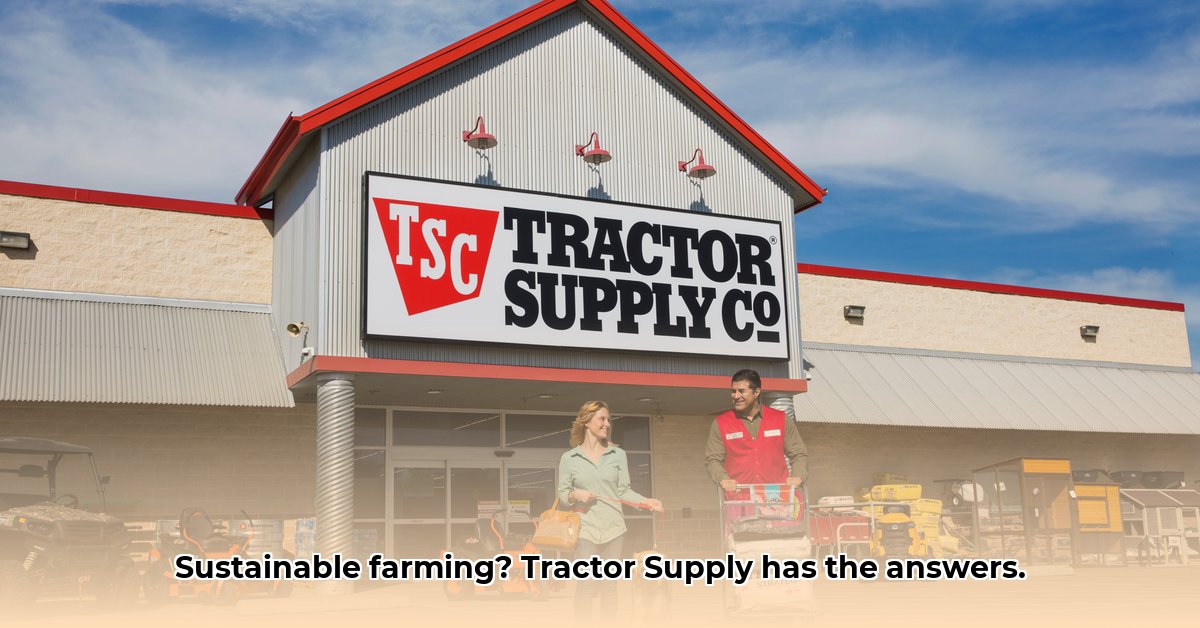
Supporting Local Sustainability Through Agricultural Practices
Tractor Supply (TSC) in Amenia plays a significant role in the local agricultural community, providing essential supplies to farmers and gardeners of all scales. However, evaluating its contribution to sustainable farming requires a closer look at its sourcing practices, product offerings, and community engagement initiatives. Does TSC prioritize suppliers committed to ethical and environmental standards? Are organic and fair-trade certified goods readily available? The transparency of these practices directly impacts TSC's overall environmental footprint and its contribution to a more sustainable agricultural sector. Data on TSC's carbon footprint, waste reduction programs, and community environmental partnerships remains limited, hindering a comprehensive assessment. For more information on TSC's distribution network, see this TSC Distribution Centers.
How much is TSC truly investing in sustainable agricultural solutions? This critical question requires more transparent data reporting to answer effectively. The availability and accessibility of eco-friendly options within their stores directly affect the choices farmers can make.
Analyzing TSC's Environmental Impact and Areas for Improvement
A comprehensive analysis of TSC Amenia's environmental impact is currently hampered by a lack of publicly available data. Information on carbon emissions, waste management, water usage, and supply chain sustainability is crucial for a complete evaluation. This data scarcity makes it difficult to accurately assess the full scope of their environmental footprint. Increased transparency in this area is essential for informed decision-making by consumers and stakeholders. Without detailed information, it remains challenging to gauge the effectiveness of their efforts.
Could enhanced transparency significantly improve consumer trust and loyalty towards TSC? The answer is undoubtedly yes.
Immediate Actions for Enhanced Sustainability at TSC Amenia
To significantly enhance its sustainability profile, TSC Amenia can immediately implement the following strategies:
Rigorous Supply Chain Audits: Conduct thorough audits of its suppliers, ensuring adherence to responsible environmental and ethical standards. Prioritize suppliers with demonstrable commitments to sustainability. (Efficacy: Improved traceability and reduced environmental impact of sourced goods).
Farmer Education Initiatives: Invest in educational programs for local farmers, featuring in-store workshops, online resources, or partnerships with agricultural experts. This will promote the adoption of sustainable farming practices. (Efficacy: Increased adoption of sustainable farming techniques by local farmers).
Consumer Education and Transparency: Clearly label sustainable products in-store and online. Launch educational campaigns to inform consumers about the environmental benefits of choosing sustainable options. (Efficacy: Increased consumer demand for sustainable products, driving market changes).
A Long-Term Vision: Building a Sustainable Agricultural Ecosystem
Over the next three to five years, TSC Amenia can further enhance its sustainable impact by:
Developing Partnerships: Collaborate directly with local farmers to build a resilient, localized food system. This would involve supporting sustainable farming practices through access to resources and training.
Comprehensive Sustainability Strategy: Develop a corporate sustainability strategy encompassing carbon footprint reduction, ethical sourcing, and active support for local environmental initiatives. Setting measurable goals and reporting mechanisms is crucial.
Community Engagement: Participate actively in community environmental stewardship programs. Support local initiatives aimed at promoting sustainable agriculture and resource conservation.
Potential Challenges and Mitigation Strategies
Several challenges hinder the transition to sustainable practices. Proactive mitigation strategies are essential:
| Risk Factor | Likelihood | Impact | Mitigation Strategy |
|---|---|---|---|
| Sourcing from unsustainable suppliers | High | High | Comprehensive supplier audits, partnerships with certified sustainable suppliers. |
| Limited consumer awareness | Moderate | Moderate | Targeted educational campaigns highlighting the benefits of sustainable farming. |
| Competition from unsustainable businesses | High | High | Focus on added value of sustainable products; transparent communication of sustainability efforts. |
| Packaging and transportation impacts | High | High | Transition to eco-friendly packaging; optimize logistics for reduced emissions. |
The Path Forward: Collaboration and Transparency
TSC Amenia's potential to contribute to sustainable agriculture in Amenia is significant. However, this hinges on a commitment to transparency, measurable actions, and collaboration with farmers, consumers, and the wider community. Further research, including interviews with store management and customer surveys, would provide a more nuanced understanding of their overall impact. The journey towards sustainability requires a collective effort, ensuring the long-term health of both the environment and the local agricultural ecosystem.